
Menu Development & Digital Menu Board Design
— OUR SERVICES
Building a Profitable, Customer-Centric Food Experience
A menu is one of the most commercially powerful assets a food business owns. It shapes what customers order, how much they spend, and how efficiently the kitchen operates. Our menu development and digital menu board design service helps restaurants, cafés, takeaways, and franchise brands in Durban, KwaZulu-Natal, and across South Africa build offer structures that are easier to execute, more profitable to sell, and designed to scale.
Most menus grow organically — items are added because customers ask, operators experiment, or suppliers change. The result is often a list that is too long, too complex, and too difficult for the kitchen to execute consistently. A well-developed menu is the opposite: deliberately structured, commercially sound, and designed to guide customer decisions in the direction that best serves the business.
1. Menu Strategy and Brand Positioning
Before any product is developed, the menu needs a clear commercial direction. What should the brand be known for? What customer needs is it serving? And what should it deliberately leave out to stay focused and operationally practical?
Menu Identity and Category Focus
Whether the concept is fast casual, premium, family dining, or takeaway shapes every decision that follows — from price points to portion sizes to packaging.
Price Architecture
Pricing must support both the customer’s perception of value and the business’s margin requirements. Getting the structure right early avoids problems that become harder to fix at scale.
Operational Fit
The best menu for a concept is the one that can be delivered consistently within the kitchen space, staffing model, and service speed the business actually has — not the one that looks best on paper.
2. Local Market Context and Customer Demand
A menu that performs well in one location may not perform as well in another. Customer spending behaviour, portion expectations, dietary preferences, and trading patterns can all vary meaningfully between neighbourhoods, cities, and regions.
Local Demographics
Students, families, office workers, and commuters have different needs and different relationships with price. Understanding the primary customer in each location shapes the offer more precisely.
Spending Behaviour and Value Perception
What represents good value in the target area is a commercial reality that must be built into the price architecture — not assumed from the outset.
Cultural and Dietary Context
Flavour preferences, dietary requirements, and lifestyle choices relevant to the market inform product selection and positioning.
Trading Patterns
Lunch, dinner, delivery, and peak-period demand all behave differently and may warrant different product emphasis or pricing logic across the day.
3. Product Development, Testing, and Standardisation
Each item on the menu needs to perform in three ways simultaneously: it must appeal to the customer, it must be consistently executable in the kitchen, and it must make commercial sense at the price it is sold. Product development tests all three before any item is finalised.
Ingredient Sourcing and Cost Control
Each recipe is costed at realistic ingredient prices to confirm that the item can be sold profitably at a price the market will accept.
Portion and Recipe Consistency
Standardised specifications ensure that every customer receives the same product regardless of which staff member prepares it or which location they visit.
Preparation Speed and Staff Practicality
Items that take too long to prepare or require skills that are difficult to train reliably create operational risk at scale. These issues are better identified in development than on the floor.
Format Suitability
Packaging or plating requirements for dine-in, takeaway, and delivery may differ significantly — and each format must maintain the intended quality and brand presentation.
4. Menu Engineering and Profitability Structure
Once the product range is developed, the next task is to structure the menu so that it actively guides customer behaviour in a commercially beneficial direction — understanding the role of each item and designing the menu presentation to support upselling, cross-selling, and higher average transaction values without feeling pressured or inauthentic.
- Product role clarity: Every item should have a defined role — driving footfall, building margin, anchoring the offer, or supporting upsell. Items that do none of these things are candidates for removal.
- Combo and add-on structure: Well-constructed combinations and add-on options increase average spend naturally, by making the next logical purchase easy rather than pushy.
- Food cost review and price presentation: The way prices are displayed on a menu influences spending behaviour. Minor changes to layout, formatting, and anchoring can meaningfully affect average transaction value.
- Menu layout logic: Faster decision-making reduces counter congestion and improves both the customer experience and kitchen throughput.
5. Digital Menu Board Design
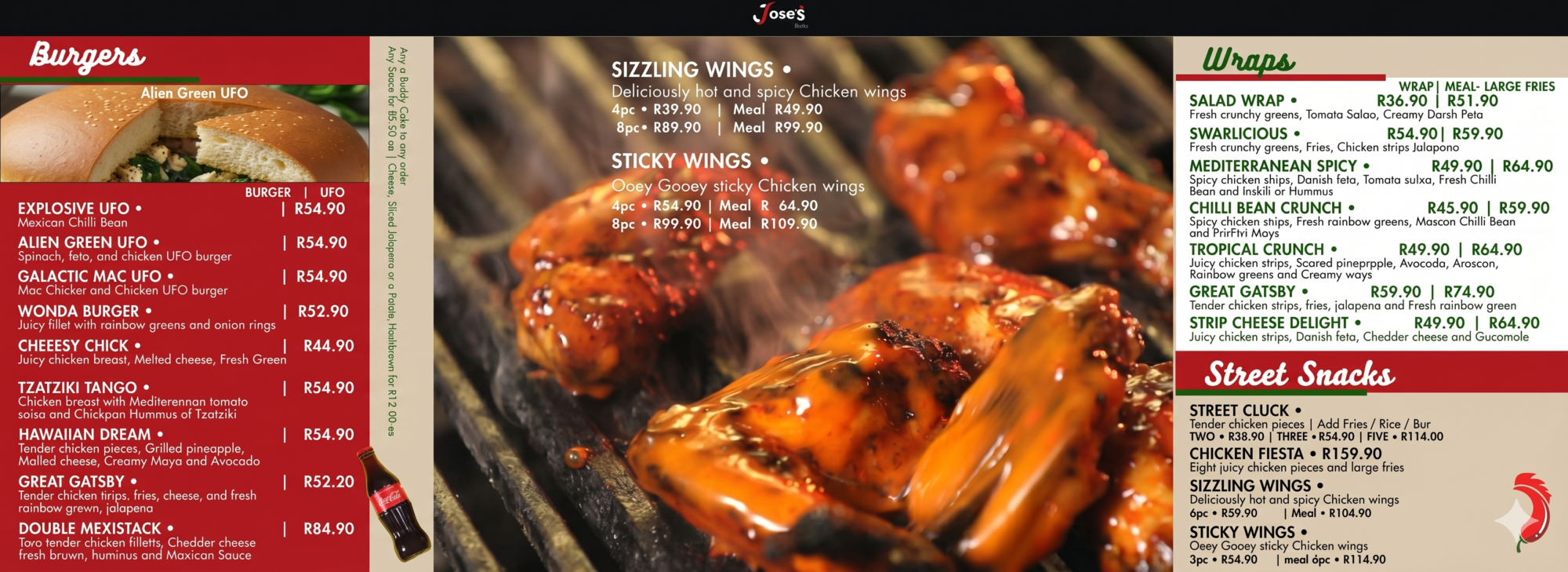
Once the menu structure and content are right, the visual presentation of the menu becomes the next commercial lever. Digital menu boards give food businesses the ability to present their offer clearly, update content quickly, and maintain consistent brand standards across multiple locations — without the cost and delay of reprinting physical menus.
- Increased visibility for high-margin items: Strategic placement and visual emphasis draw attention to the products the business most wants to sell.
- Operational flexibility: Pricing, specials, and product availability can be updated quickly — across one site or an entire franchise network — without physical reprinting.
- Daypart adaptability: A breakfast offer, a lunch menu, and a dinner menu can rotate automatically, keeping the board relevant throughout the trading day.
- Cross-location consistency: Every location in a franchise network displays the same brand standards, imagery, and messaging — protecting the identity and customer expectation across the system.
Frequently Asked Questions
What is menu development?
It is the process of defining, testing, and structuring a food or beverage offer so that every item has a clear commercial role, can be executed consistently, and supports the profitability and positioning goals of the business.
Why is menu engineering important?
Because a menu that looks appealing but lacks commercial structure often underperforms. Engineering helps identify which items drive profit, which ones attract customers, and how the offer should be arranged to increase average transaction value.
Do digital menu boards help food businesses?
Yes. They improve visual clarity, allow faster price and content updates, support promotional flexibility, and help maintain brand consistency across multiple locations — all of which contribute to better operational and commercial performance.
Can this service support franchise expansion?
Yes. A standardised, well-documented menu system supports consistency, staff training, and operational replication — all of which are essential requirements for franchise growth.
Do you work with businesses in Durban and across South Africa?
Yes. The service is designed for restaurant operators, food brands, and franchise concepts in Durban, KwaZulu-Natal, and across South Africa.
“Your menu speaks before your team does. Make it count.”
Need to register your Franchise at the Banks?